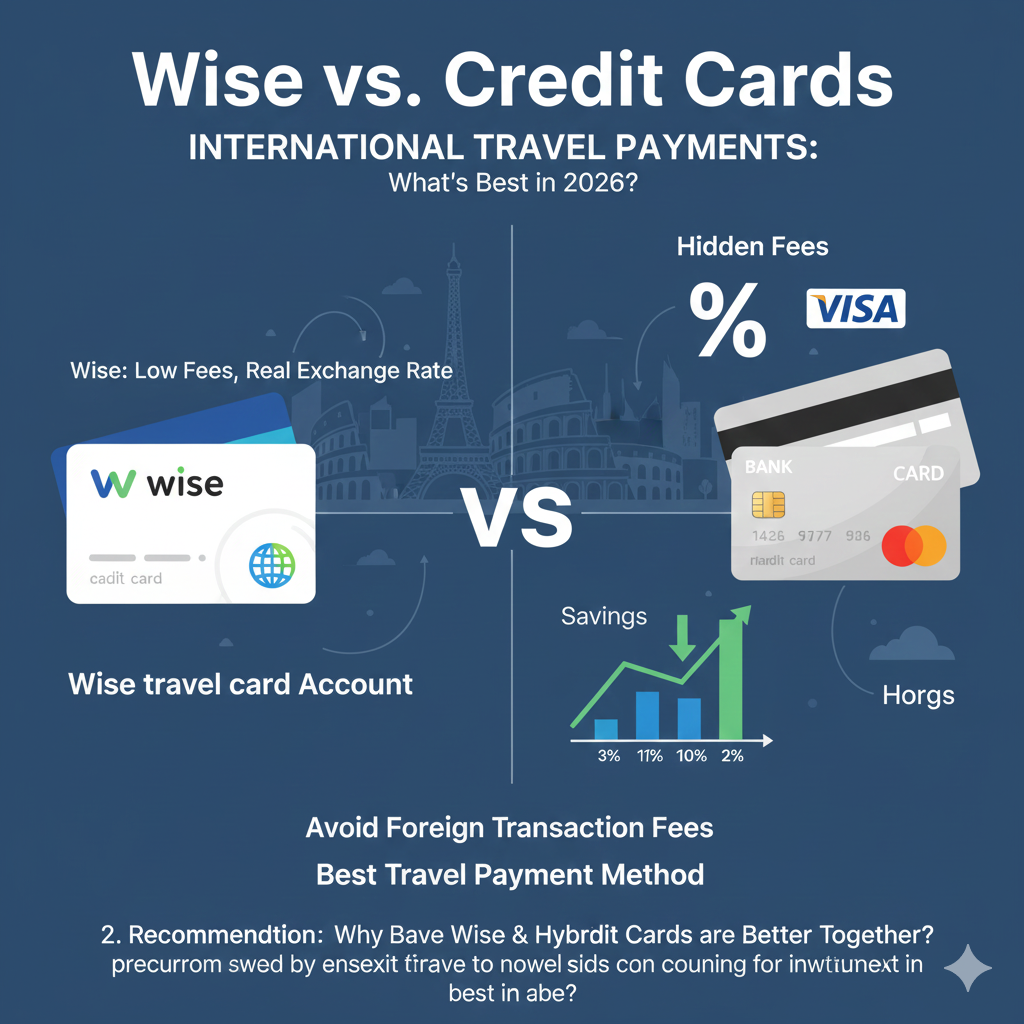

When I first started traveling internationally, I made every mistake in the book. I paid hefty foreign transaction fees, got terrible exchange rates, and came home to baffling credit card statements. Today, with digital nomads and global travelers in mind, the choice of how to handle your money abroad has evolved significantly. The big question now often boils down to: Wise vs credit card – which is the superior tool for international travel payments in 2026?
This guide cuts through the confusion, comparing the benefits and drawbacks of using a Wise travel card (formerly TransferWise) against traditional credit cards. My goal is to help you determine the best travel payment method for your next adventure, ensuring you save money and avoid unnecessary stress.
Understanding the Core Problem: Foreign Transaction Fees
Before we dive into Wise vs credit card, let’s tackle the elephant in the room: foreign transaction fees. Most standard credit cards charge a fee (typically 2.5% to 3.5%) on every purchase made in a foreign currency. This might not sound like much, but it adds up quickly. Spend $2,000 on a trip, and you could be throwing away $50-$70 just on fees. This is the primary reason why many travelers look for alternatives.
The Wise Travel Card: A Deep Dive
Wise (formerly TransferWise) revolutionized international money transfers and now offers a powerful multi-currency account with a debit card.
Pros of the Wise Travel Card:
- Real Exchange Rate: This is Wise’s biggest selling point. You get the mid-market exchange rate, the same one banks use to trade with each other. No hidden markups.
- Low, Transparent Fees: Wise charges a small, upfront fee for currency conversion (often less than 1%), which is clearly displayed before you make a transaction.
- Multi-Currency Account: You can hold and spend money in over 50 currencies, converting funds when the rate is favorable. This means you can essentially pay like a local.
- ATM Withdrawals: You get a certain amount of free ATM withdrawals per month (e.g., up to $100-$200 USD, depending on your region) before a small fee applies. This is great for getting local cash.
- Budgeting Control: As a debit card, you can only spend what you load onto it, making it excellent for budgeting and avoiding debt.
- Security: If your card is lost or stolen, only the funds loaded onto it are at risk, not your entire bank account. You can instantly freeze the card via the app.
Cons of the Wise Travel Card:
- No Credit Building: It’s a debit card, so it doesn’t help build your credit history.
- No Rewards: You won’t earn points, miles, or cashback like you would with some credit cards.
- Initial Funding Required: You need to pre-load money into your Wise account.
- ATM Limits: While some withdrawals are free, exceeding the limit incurs a fee.
Credit Cards for International Travel: The Traditional Choice
Credit cards are ubiquitous, but not all are created equal for international use.
Pros of Using Credit Cards (Specifically Travel-Optimized Ones):
- No Foreign Transaction Fees (Crucial!): Many premium travel credit cards (and some basic ones) have eliminated foreign transaction fees. If your card has this feature, it’s a game-changer.
- Rewards and Perks: Travel credit cards often offer excellent points, miles, or cashback rewards on international spending, travel insurance, lounge access, and car rental insurance.
- Fraud Protection: Credit cards generally offer robust fraud protection, often with zero-liability policies.
- Emergency Funds: A credit card provides a line of credit, acting as a crucial emergency fund if unexpected expenses arise.
- Hotel & Car Rental Holds: Many hotels and car rental agencies prefer to put a hold on a credit card rather than tying up funds in a debit account.
Cons of Using Credit Cards (Especially Standard Ones):
- Foreign Transaction Fees: The biggest drawback for most standard cards.
- Interest Rates: If you don’t pay your balance in full, high-interest rates can quickly negate any rewards.
- Exchange Rate Markups: Even cards with no foreign transaction fees might still use a slightly less favorable exchange rate than Wise.
- Overspending Risk: It’s easy to overspend when using credit, potentially leading to debt.
- ATM Cash Advance Fees: Using a credit card at an ATM for cash is almost always a bad idea, incurring immediate fees and high interest.
Wise vs Credit Card: My Recommendation for 2026
For the best travel payment method, my advice is to use both Wise and a travel-optimized credit card without foreign transaction fees.
- Use Wise for:
- ATM cash withdrawals (within free limits).
- Small, everyday purchases where you want exact budgeting.
- Paying local vendors who prefer debit or cash.
- Converting larger sums of money when the exchange rate is favorable.
- Use a No-Foreign-Transaction-Fee Credit Card for:
- Larger purchases (hotels, flights, big dinners) to earn rewards.
- Situations requiring a security deposit (car rentals, some hotels).
- Emergency situations (medical, unexpected costs).
- Taking advantage of travel insurance benefits.
This hybrid approach gives you the best of both worlds: the real exchange rates and low fees of Wise for everyday spending and cash, combined with the rewards, fraud protection, and emergency buffer of a good credit card.